
Empathy vs Sympathy: A Rhetorical Analysis of Chronic Illness Representation in Middle Grade Novels
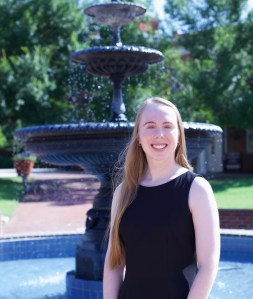
by Ireland Seagle
As Wayne Booth stated in his influential work The Rhetoric of Fiction, readers’ experiences are “indeed mediated by language” (409). Children’s literature writers use rhetorical strategies, including logos, ethos, and pathos, to intentionally shape readers’ experiences and reactions to literary works. In addition, writers utilize these strategies to craft effective and persuasive messages within the works. This use of language holds the power to change or strengthen representations, retaining individuals in their societal stereotypes or stirring them from those positions. In this essay, three categories of children’s literature and their use of rhetorical strategies are analyzed and explored: picture books, middle grade novels, and young adult (YA) books. First, picture books are “the main form of literature produced for young people before they begin to read and in their early experiences of reading on their own” (Nodelman 12). Second, middle grade novels are “the space between chapter books and teen fare” with protagonists who “are developmentally moving out of childhood with true adolescence hovering on the horizon” (Maughan). Third, YA books are aimed at teenage audiences and usually “contain darker, more complex material” (Maughan). For protagonists with chronic illness, picture books and YA novels primarily use logos or pathos; however, middle grade novels use a balance of rhetorical appeals to advocate for empathy rather than sympathy.
Children’s literature with chronically ill protagonists is typically grouped under a category called “sick lit.” According to scholar Julie Elman, sick lit is “a genre of adolescent fiction that fuse[s] illness and romance narrative to reinforce the interdependent norms of able-bodiedness, heteronormativity, emotional management, and maturity” (175). Although sick lit usually involves YA novels, the genre expands to picture books and middle grade novels as well. In middle grade novels, including those considered under the sick lit genre, the young protagonist attempts to decipher “what others think of the self in order to make decisions about which perspective to internalize as defining features of the self” (Coats 155). When the protagonist either has a chronic illness or is a survivor of a chronic illness, such as cancer, this already complex process of self-discovery is further complicated by medical terms and the opinions of medical personnel. Additionally, the concept of medical autonomy and mutual pretense is often characteristic of sick lit narratives. Scholar Susan Honeyman states that mutual pretense is an unstated agreement in which the child’s parents and doctors acknowledge the patient’s dying attributes yet act as if they are not dying (179). In turn, this concept creates a “wall of silence around potential child death,” and this defensive strategy by adults prevents young patients from exercising their right “to be informed and participate as knowing medical subjects” (Honeyman 180-181).
Although picture books use all three rhetorical appeals, writers who compose picture books often favor logos to describe chronic illnesses, including cancer. For instance, in Sadako and the Thousand Paper Cranes, the narrator focuses on the physical aspects of a medical exam, which appeals to readers’ logic and reason: “Sadako was in an examining room in the hospital, where a nurse took … her blood. Dr. Numata tapped her back and asked a lot of questions” (Coerr 19). In this excerpt, the writer uses detailed descriptions that revolve around the process of a medical exam to influence audiences to view cancer, specifically leukemia, through a logical, unemotional lens. Moreover, this unstylistic, insensitive writing that features a plethora of medical resources is characteristic of tension between the surface ideology and passive ideology. While the writer, Eleanor Coerr, wants to diversify children’s literature by composing a book with a chronically ill character (surface ideology), the author experiences anxiety when attempting to discuss this complex and emotional topic to children (passive ideology). Thus, the passive ideology clashes with the surface ideology, which appears in Sadako as medical resources with facts and definitions regarding leukemia. Additionally, this focus on logos erases the discussion of mutual pretense between chronically ill children and their parents. In other words, the emphasis on medical facts and symptoms reduces Sadako’s humanity, and this situation encourages Sadako’s parents, who already act as if their child is not dying, to further distance themselves from discussing Sadako’s death and from discussing mutual pretense with their child. Thus, Sadako utilizes logos, specifically descriptions of medical exams, to further strengthen this wall by distancing the story from the emotions surrounding children’s mortality.
Contrary to often logos-focused picture books, YA novels are more prone to employ pathos to describe chronic illness and to appeal to readers. Like picture books, sick lit YA novels also utilize several rhetorical appeals, yet pathos is their favored strategy. In The Fault in Our Stars, Hazel’s status as the chronically ill protagonist is the foundational “vehicle for the production of sadness” (Elman 179). For example, Hazel explains the finality of her diagnosis: “I’d never been anything but terminal; all my treatment had been in pursuit of extending my life, not curing my cancer … My final chapter was written upon diagnosis” (Green 166). Although Hazel’s hobbies and interests are developed throughout the novel, this sentence emphasizes cancer as the hallmark of Hazel’s identity. This designation attempts to lessen the reader’s empathy for a well-rounded individual since the cancer aspect of her identity is forefront.
Although The Fault in Our Stars bids readers “to question mutual pretense in favor of open awareness” and to identify partially with the chronically ill characters, the sheer amount of pathos employed in the novel undermines this empathetic conversation (Honeyman 189). For instance, during an argument with her parents, Hazel associates herself with a weapon of war to create further sympathy for her medical and life situation: “‘I’m like a grenade, Mom. I’m a grenade and at some point I’m going to blow up’” (Green 99). By repeatedly using and emphasizing a war-related simile, connecting herself with a deadly weapon and her time-sensitive death, Hazel’s knowledge of her mortality and her directness with stating this mortality attempts to evoke intense emotions of sympathy in the reader.
While YA novels typically employ a plethora of pathos-related rhetorical strategies, one example of a middle grade novel that uses a balance of all three rhetorical appeals to describe the protagonist’s chronic illness is Braced by Alyson Gerber. In this novel, the protagonist named Rachel has scoliosis, and her recently worsened condition requires her to wear a brace to mitigate further curvature in her spine. The writer employs medical definitions and processes, explained by Rachel, to appeal to readers’ logic: “I have progressive idiopathic scoliosis. Translation: My spine is curving into an ‘S’ shape … it’s a lot harder to fix the curve after I’m done growing, which is why I’m being monitored now” (Gerber 13). The use of medical terms and definitions, along with explaining the significance of her situation, allows the reader to connect with Rachel and creates the foundation for an empathetic experience. In addition, this detailed description of the routine scoliosis exam from Rachel’s perspective displays her medical knowledge, strengthening her ethos, or credibility, as a young adult. Additionally, Gerber utilizes descriptions of wearing the brace (visual imagery) to appeal to readers’ emotions: “The pads inside the brace feel like sharp rocks being pushed against my ribs and back … it’s not getting any easier to breathe” (Gerber 28). This description invokes feelings of constriction in the readers’ movements to allow them to empathize with Rachel’s painful position. Moreover, this use of pathos and reaching these emotional depths with readers suggests that the writer, Alyson Gerber, is comfortable speaking to adolescent readers about scoliosis, back braces, and the emotional complexities the illness and braces create. Thus, this stylistic writing indicates the passive ideology is not undermining the surface ideology in the novel.
In addition to its balance of rhetorical appeals, Braced also emphasizes an attitude of empathy rather than sympathy by pushing for child protagonists’ autonomy in medical discussions. In this novel, Rachel’s scoliosis doctor, Dr. Paul, and Rachel’s mom make medical decisions, including obtaining Rachel’s brace, without Rachel’s own opinions being voiced. In addition, during Rachel’s appointments, Dr. Paul invites medical resident students to observe the session and discusses Rachel as if she is not in the room (Gerber 14). These dismissive behaviors or “abusively protective ‘rights’” disregard Rachel’s “child patient’s right to participation” (Honeyman 184-185). Consequently, Rachel confronts her mother and explicitly details her feelings regarding this encroachment on her rights: “‘He [Dr. Paul] doesn’t explain anything. He acts like I’m not even in the room until it’s time to examine me!” (Gerber 232). Through this candid conversation with her mom, Rachel advocates for her needs and challenges conventional mutual pretense representations in children’s literature depicting chronically ill protagonists. Ultimately, this resolution of mutual pretense between Rachel, her mom, and her doctors shows chronically ill characters’ autonomy and encourages readers’ (adult or child) to acknowledge the protagonist as an equal rather than a minor to be looked down upon.
A second example of a middle grade novel that balances all three rhetorical appeals is Halfway Normal by Barbara Dee. Similar to Braced, the protagonist in Halfway Normal, Norah, describes her experiences with the medical aspects of cancer and the follow-up appointments during her remission: “After the exam I had a bone marrow aspiration so they could check me for any leukemia cells hiding deep inside my bones” (Dee 122). In this excerpt, Barbara Dee uses logos, specifically the factual outline of Norah’s remission exams, to appeal to readers’ logical understanding and to illustrate Norah’s ethos as an adolescent and as a chronically ill protagonist. Moreover, although surface ideology often presents in logos and ethos strategies, the novel’s passive ideology involves little anxiety regarding the subject matter of cancer, especially in Norah’s pathos-focused appeals. For instance, during the same remission appointment, Norah states her anxiety of needles despite her extensive experience with them: “Even after two years of treatment, I still hated needles worse than anything, and this one hurt like a whole hive’s worth of beestings” (Dee 122). This description invokes visual imagery and a common medical experience shared among readers, regardless of age or health status, to appeal to readers’ fears of needles. In addition, this quotation examines and challenges the passive ideology of society’s beliefs that cancer patients do not dread needles because they are accustomed to the objects being inserted in their bodies. Thus, the surface and passive ideologies are not conflicted with one another as in sick lit picture books. Ultimately, this balance of rhetorical appeals in Halfway Normal advocates for empathy through common shared medical experiences rather than division or pity.
As with Braced, Halfway Normal also incorporates several mutual pretense discussions to advocate for empathy instead of sympathy. For instance, following Norah’s cancer remission and readmittance to middle school, Norah’s parents create strict rules, such as washing hands extensively throughout the day and not staying the night at friends’ houses, for Norah to follow to mitigate negative consequences on her weakened immune system. In addition, Norah’s guidance counselor refrains from uttering the word “cancer” in Norah’s presence to mitigate damaging her allegedly delicate emotions regarding chronic illness and mortality: “I had CANCER, Ms. Castro. The gods don’t zap you with it if you say it out loud” (Dee 7). Then, after an appointment with her cancer doctor, Dr. Choi, who believes in not allowing a young patient to participate in medical decisions, Norah and her father enter an unresolved mutual pretense conversation regarding the decision to have Norah wear a mask to prevent further harm to her immune system: “Dad sighed. ‘Norah, it’s not really up to you.’ ‘Who’s it up to, then? … You? Mom? But it’s my body!” (Dee 177-178). These mutual pretense conversations not only remove Norah’s autonomy but also appeal to adolescent and adult readers’ own experiences of a lack of medical independence. This pathetic appeal to readers’ own encounters creates a connection between themselves and the protagonist, further developing the empathetic feeling with Norah.
A third example of a middle grade novel that incorporates a balance of all three rhetorical appeals is The Honest Truth by Dan Gemeinhart. Although Mark, the chronically ill protagonist, never describes factual terms or information about his cancer, he does recount his physical symptoms of his chronic illness. For instance, when Mark is boarding the train to leave his hometown, he describes his intense bodily side effects of his cancer and treatment: “My lungs were heaving. My breaths were hard and fast, and my stomach was starting to feel sick. A thin ache had begun to poke in my head” (Gemeinhart 6). These physical symptoms of either his cancer or treatments for his cancer act as factual resources or processes that appeal to readers’ logic in place of medical terms and medical exam processes. Later in the novel, Mark also utilizes pathos in the form of visual imagery to appeal to readers’ pity: “I was lost in thoughts … of doctors’ offices, hospital beds, nurses with kind faces and sad eyes, cheerful cards from classroom friends” (Gemeinhart 131). While Mark’s sentiments engage with readers’ sympathetic tendencies in this statement, he quickly pivots to a description of his silver pocket watch from his grandfather and his own mortality: “I loved the watch until I started hating time. And how it ran out” (Gemeinhart 131). In this excerpt, Mark’s statement persuades readers to consider their common and shared fear of death with him, attempting to invite the reader to empathize with Mark rather than pity him for developing cancer and for facing death.
Similar to Braced and Halfway Normal, The Honest Truth also uses discussions of mutual pretense to advocate for empathy in place of sympathy. For instance, when Mark is about to climb Mount Rainier, a National Park Service biologist named Wesley approaches Mark and begins discussing an adolescent boy with cancer who has gone missing. Mark is the missing boy and implicitly defends himself by questioning the news media’s power to share his relapsed cancer diagnosis: “‘Isn’t that personal? Isn’t that private? Why is that everybody’s business?’” (Gemeinhart 150). In this quotation, Mark emphasizes his right to privacy as a “knowing medical subject,” which connects with the readers’ shared experiences and concerns regarding medical privacy (Honeyman 180). This connection further encourages readers to empathize with and understand Mark’s perspectives. A few pages later, Wesley deduces Mark’s identity as the missing boy and attempts to prevent Mark from climbing Mount Rainier; however, Mark defends himself and emphasizes his lack of autonomy since his initial cancer diagnosis seven years prior: “‘I’ve gotten no choices. For my whole life, no choices … Let me have this one thing before all my choices get taken away again’” (Gemeinhart 160). Although Mark does not explicitly state whether his lack of autonomy stems from his young age or his chronic illness, his use of the word “again” represents his recent relapse of cancer, suggesting that his lack of autonomy is medically derived from his chronic illness. Thus, Mark indicates that adults’ protective behaviors have and will continue to infringe upon his “participatory rights to full knowledge and self-determination” of his body, indicating the existence of mutual pretense (Honeyman 180). Mark’s sentiments connect with readers’ own experiences, fear, and anger at losing autonomy over their bodily decisions and encourage readers to empathize with Mark’s situation.
This emphasis on utilizing a range of rhetorical appeals in sick lit narratives in middle grade novels is most practical due to the category’s experimental characteristics. In general, middle grade literary works cover a range of social issues individuals aged eight to 12 years old experience, including shifts in familial relationships and friendships and changes in their physical body (Maughan). To accompany this discussion of individuals navigating these issues, middle grade novels also emphasize the characters’ “growing awareness of the wide world outside of oneself and the injustices it often contains” (Maughan). This attribute mimics the increasing worldly awareness of real-life children and preteens who read this category of literature. Thus, middle grade compositions test boundaries and explore complexities both in the genre itself and within the stories they share. As Chronicle Books editor Taylor Norman discussed, “A middle grade book doesn’t have to be about a middle grade kid, or even a kid at all. Middle grade can be told from first person plural, or be about an old man, or be in the voice of a dog … It allows for any kind of experimentation you’d find in any other genre” (Maughan). This experimental trait in middle grade novels allows sick lit authors to explore the entire spectrum of emotions for chronically ill characters. Consequently, middle grade writers utilize a balance of rhetorical appeals to effectively traverse this spectrum and invite the reader to consider this range of emotions. Due to the exploratory nature of the middle grade category, an assortment of rhetorical appeals is more feasible in middle grade novels than picture books or YA novels. Unlike middle grade narratives, picture books are typically marketed for readers under the age of eight and depict “visions of childhood pleasing to adults in terms of images and ideas of home” (Nodelman 23). Additionally, YA novels are marketed for young readers aged 12 to 18, and this category of children’s literature “seems to attract both the desire to indulge and the anxiety to protect the peculiarly vulnerable child” (Olson 3). Since the goals and themes of picture books and YA novels revolve around adult intervention and the child character’s safety rather than their independence, these two categories do not use rhetorical appeals in the same way as middle grade narratives.
In conclusion, although picture books and young adult novels favor logos or pathos to appeal to readers, middle grade novels use an even distribution of the three primary rhetorical appeals to advocate for empathy rather than sympathy for chronically ill protagonists. Braced, Halfway Normal, and The Honest Truth all use logos, ethos, and pathos to appeal to and connect with readers’ shared medical experiences, allowing readers to empathize with protagonists Rachel, Norah, and Mark more easily. In addition, all three middle grade novels incorporate discussions of mutual pretense and medical autonomy, which urges the reader to understand and empathize with the protagonists’ desire for bodily independence. Moreover, this balance of rhetorical appeals suggests that all three writers are comfortable with discussing emotional and factual aspects of cancer with adolescent readers, indicating that the surface and passive ideologies in all three books are not clashing with one another. Ultimately, this push for empathy instead of sympathy emphasizes that chronically ill adolescent protagonists should be viewed as knowledgeable individuals capable of making their own decisions and of operating, to certain limits, without adult assistance. Although chronically ill protagonists’ lives are at stake more than other middle grade characters due to the mortality surrounding chronic illness, their autonomy should not be thwarted by protective adults. In addition, writers’ emphasis on empathy in middle grade sick lit novels promotes more complex emotions of understanding and compassion in readers rather than division or pity, making readers more socially intelligent. As Norah says in Halfway Normal, “‘I think empathy is harder because when you put yourself in someone else’s shoes, sometimes you feel things you don’t want to’” (Dee 158). While empathizing with chronically ill protagonists may make readers feel vulnerable, this understanding and compassion can build community and connection that sympathy cannot achieve with its unequal power dynamic.
Works Cited
Booth, Wayne. The Rhetoric of Fiction. 2nd ed., University of Chicago Press, 1983.
Coats, Karen. “Form as Metaphor in Middle Grade and Young Adult Verse Novels.” The Lion and the Unicorn, vol. 42, no. 2, April 2018, pp. 145-161.
Coerr, Eleanor. Sadako. Illustrated by Ed Young, G.P. Putnam’s Sons, 1993.
Dee, Barbara. Halfway Normal. Aladdin, 2017.
Elman, Julie. “‘Nothing Feels as Real’: Teen Sick-Lit, Sadness, and the Condition of Adolescence.” Journal of Literacy & Cultural Disability Studies, vol. 6, no. 2, 2012, pp. 175-191.
Gemeinhart, Dan. The Honest Truth. New York: Scholastic Press, 2015.
Gerber, Alyson. Braced. Arthur Levine Books, 2017.
Green, John. The Fault in Our Stars. Dutton Books, 2012.
Honeyman, Susan. “Lies We Tell Sick Children: Mutual Pretense and Uninformed Consent in Cancer Narratives.” The Lion and the Unicorn, vol. 40, no. 2, April 2016, pp. 179-195.
Maughan, Shannon. “Navigating Middle Grade Books.” Publishers Weekly, 13 Apr. 2018, https://www.publishersweekly.com/pw/by-topic/childrens/childrens-industry-news/article/76625-navigating-middle-grade.html.
Nodelman, Perry. “Words Claimed: Picturebook Narratives and the Project of Children’s Literature.” New Directions in Picturebook Research. Routledge, 2010, pp. 11-26.
Olson, Marilynn. “In the Throes of Definition.” Children’s Literature Association Quarterly, vol. 18, no. 1, 1993, pp. 2-3.
—
Ireland Seagle is a 2023 graduate of Longwood University with a degree in English and Professional Writing. During her time at Longwood, Ireland worked as a peer consultant at the university’s writing center and as a freelance writer. Her work is published in INCITE: The Journal of Undergraduate Scholarship.
 queen city writers
You must be logged in to post a comment.